
How to Choose Your First Paramotor Wing: 2026 Framework

By Tim Sabre, Paragliding Shop
Choosing your first paramotor wing can be daunting for beginners, especially with the evolving landscape of paramotoring in 2026. This guide aims to simplify the decision-making process by outlining the essential elements to consider when selecting a wing. Readers will gain insights into various wing types, safety ratings, handling characteristics, and the latest trends tailored for novice pilots. Understanding these factors helps new pilots not only enjoy a safer flying experience but also cultivate confidence in their skills. This article covers crucial topics such as key wing types, safety ratings, handling characteristics, and the features to prioritise, enabling aspiring pilots to make informed choices.
What Are the Key Paramotor Wing Types for Beginners in 2026?
In 2026, paramotor wings come in various types tailored for beginners, each designed to enhance safety and ease of use. The main types include EN A wings, optimised for stability and performance, and EN B wings, which offer slightly more agility while maintaining safety. Beginner wings focus on facilitating an easier learning curve, providing stability during flight, and ensuring pilots can handle challenging weather conditions efficiently.
Key types include:
-
EN A Wings: Ideal for novices, these wings are designed for maximum stability and minimal pilot workload.
-
EN B Wings: Suitable for those with a bit more experience, these offer improved maneuverability without sacrificing safety.
-
Lightweight Wings: These options are increasingly popular, allowing for greater portability while still being user-friendly.
These wing types collectively ensure that a new pilot can find a suitable fit based on their specific needs and skills progression.
How Do EN A and EN B Safety Ratings Define Beginner Wings?
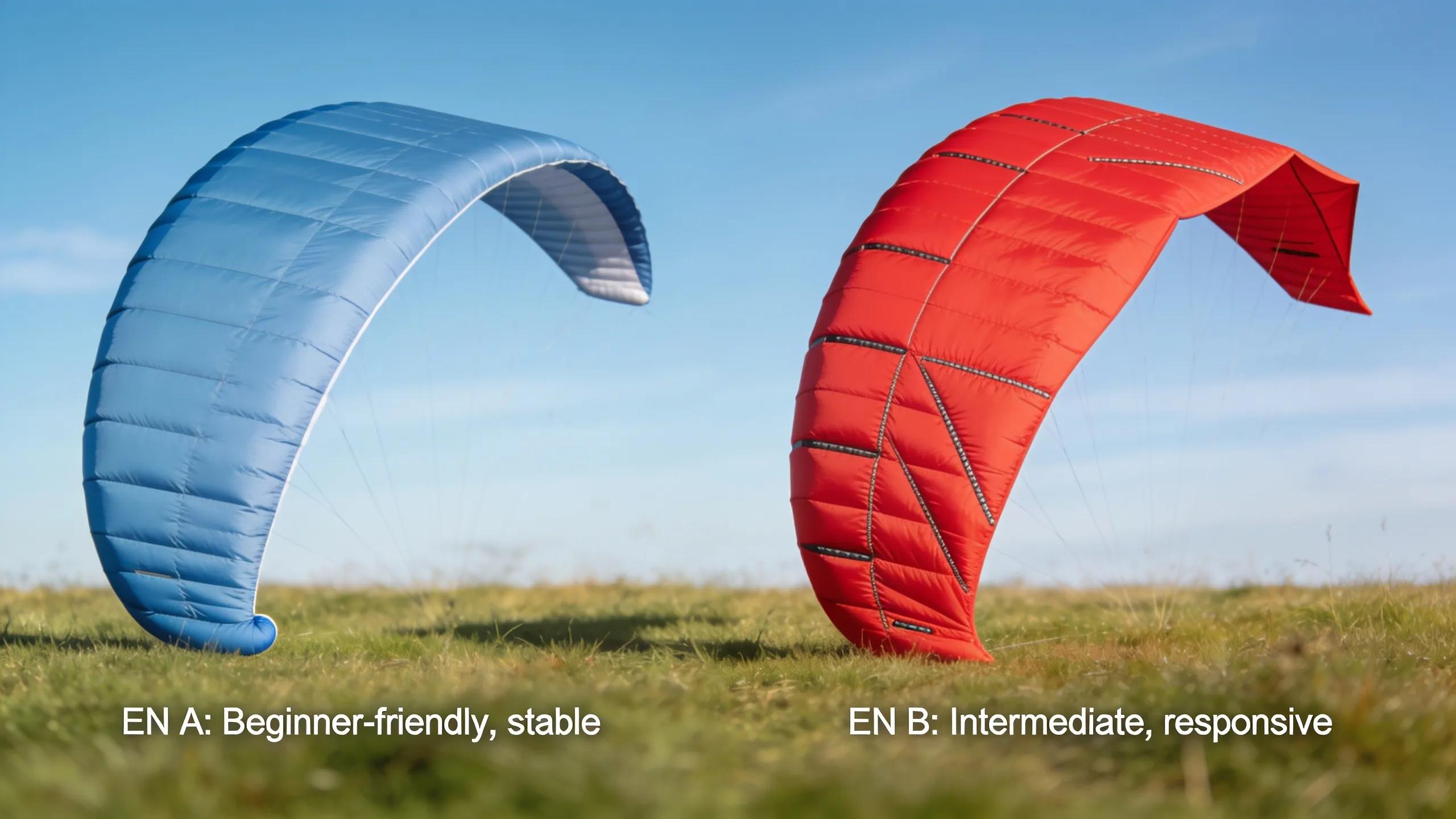
EN A and EN B safety ratings are critical in determining the suitability of wings for beginners. EN A wings are considered the safest option in the EN standard, providing maximum stability to new pilots. These wings are extensively tested to ensure they can handle various flying conditions safely. EN B wings, on the other hand, offer a mix of safety and performance, making them suitable for slightly more experienced pilots.
To better understand how these classifications correlate with pilot safety and risk management, consider the following expert perspective.
Understanding Paraglider Wing Safety Classes: EN-B Explained
At a wing from the EN-B class. This is a midrange class of paraglider, designed to balance performance with safety
Quantifying risk in air sports: flying activity and incident rates in Paragliding, M Wilkes, 2014
Understanding these ratings helps new pilots pick wings that align with their flying experience and objectives. When considering a paramotor wing, it's essential to prioritise safety without compromising on learning opportunities.
Which Wing Handling Characteristics Suit New Pilots Best?
New pilots benefit significantly from wings with specific handling characteristics designed for ease and comfort. The ideal beginner wing should possess exceptional stability, responsive turn capability, and predictable behaviour in flight. Wings designed with reinforced seams and wider cell structures enhance stability, allowing more forgiveness during initial flights.
Key characteristics include:
-
Stability: Wings that prevent excessive roll or pitch during flight.
-
Responsiveness: The ability to turn and maneuver without undue effort.
-
Predictability: Wings that respond consistently to pilot inputs, enhancing overall confidence.
These handling traits empower new pilots to focus on learning rather than wrestling with their equipment.
What Safe Features Should Your First Paramotor Wing Have?
Safety features are paramount for any beginner paramotor wing. Key elements to consider include:
-
Reinforced Seams: Ensure that the wing can withstand the stresses of flight without risk of failure.
-
Emergency Handles: Good wings should include handles designed for quick deployment in emergencies.
-
Certification: Select wings from reputable brands with EN certification to guarantee safety standards.
By focusing on these features, beginners can mitigate risks and develop their piloting skills with greater assurance.
Which Certification Bodies and Safety Standards Are Most Reliable?
When selecting a paramotor wing, it’s essential to consider the certification bodies that set safety standards. Key organisations include:
-
European Union (EN): Responsible for the EN safety classifications, which are widely recognised and respected.
-
U.S. Sports Association: Plays a role in certifying wings for use within the United States, ensuring safety and performance across different models.
-
International Paramotor Association: This organisation provides guidelines on safety practices and equipment standards.
Certifications from these bodies ensure that wings adhere to high safety benchmarks, providing peace of mind for new pilots.
How Do Safety Features Impact Flight Stability and Pilot Confidence?
Safety features directly correlate with flight stability and the overall confidence of the pilot. Features like reinforced seams and durable wing fabrics reduce the risk of equipment failure during flights. Having a wing designed with emergency systems not only enhances safety but also boosts a pilot's confidence, enabling them to focus entirely on learning how to fly.
Consequently, wings that integrate robust safety features help to nurture a more enjoyable and less stressful learning experience for novices. Understanding this connection makes it easier for beginners to appreciate the importance of investing in quality wings.
How Can You Compare Beginner Paramotor Wings Effectively?
When comparing different paramotor wings for beginners, several criteria merit consideration:
-
Performance Metrics: Look at climb rate, glide ratio, and stability ratings to assess wing performance.
-
User Reviews: Investigate feedback from other new pilots to gauge satisfaction levels and ease of handling.
-
Usage Conditions: Identify where and how often you plan to fly, including altitude and weather conditions.
By employing these comparison techniques, novice pilots can make informed decisions about which wings will best suit their individual flying styles.
What Criteria Should Be Used When Evaluating Wing Weight and Materials?
Evaluating the weight and materials of paramotor wings is essential for performance and safety. Lightweight wings made from advanced synthetic fabrics can enhance flight dynamics but may also present durability concerns. Key criteria include:
-
Material Durability: Look for wings constructed with materials designed to withstand the wear and tear of frequent use.
-
Weight-to-Performance Ratio: Heavier wings may provide added stability, while lighter options can improve portability.
Balancing these considerations ensures that you choose a wing that meets both safety and performance expectations.
Which Brands Offer 2026 Wings Optimised for Beginners?
Several brands stand out in 2026 for providing wings optimised for beginners. These brands are known for their commitment to quality and safety, making them ideal choices for new paramotor pilots.
-
Paragliding Shop: Offers a comprehensive range of beginner-friendly paramotor wings, focusing on safety features and innovative designs.
-
Brand X: Known for EN A certified wings that ensure safe flying experiences for novices.
-
Brand Y: Provides lightweight wings that appeal to new pilots looking for ease of transport and handling.
These options collectively cater to various beginner needs, ensuring they have access to reliable and safe flying equipment.
What Are the Latest Trends in Lightweight Paramotor Wings for 2026?

In 2026, there is a notable trend toward lightweight paramotor wings, offering increased portability without compromising safety. Innovations in fabric technology have led to enhanced performance characteristics, making lightweight options an attractive choice for new pilots.
Prominent trends include:
-
Composite Fabric Technology: New materials enhance durability while reducing weight significantly.
-
Streamlined Designs: Advances in wing design have minimised drag, improving overall flight efficiency.
-
Colourful Visuals: Manufacturers are incorporating bright colours and patterns, improving visibility during flight.
These developments position lightweight wings as a favourable option for both transport and practical flying experience.
How Do Lightweight Composite Fabrics Improve Wing Performance?
Lightweight composite fabrics contribute to improved wing performance by enhancing flight efficiency and maneuverability. These fabrics reduce overall weight while maintaining structural integrity, which can significantly impact a paramotor's handling and stability.
-
Enhanced Aerodynamics: Lightweight fabrics enable smoother airflow over the wing, resulting in better glide ratios.
-
Reduced Pilot Fatigue: A lighter wing requires less effort to maneuver, allowing pilots to stay airborne longer without fatigue.
Understanding the benefits of these materials empowers new pilots to make informed decisions when selecting their wings.
What Are the Safety Trade-offs When Choosing Lightweight Wings?
While lightweight wings offer considerable advantages, there are safety trade-offs to consider. As these wings often prioritise portability and performance, some may compromise on durability and strength, which could affect safety in challenging conditions.
Key considerations include:
-
Risk of Damage: Lightweight wings may not withstand rough landings or turbulent conditions as effectively as their heavier counterparts.
-
Performance Limitations: In strong winds or adverse weather, lightweight wings can behave unpredictably, potentially leading to dangerous situations.
Effective decision-making around wing selection requires a deep understanding of these trade-offs to enhance safety during flying.
